Corporate Dress Codes Decoded for the Modern Office
Hybrid work removed the written dress code from most modern offices. Here are the four main corporate dress codes, from most to least formal:
- Business Formal: Matching suit and tie, dark colours, polished leather shoes. No flexibility.
- Business Professional: A suit is still required, but with more flexibility in tie, colour, and accessories.
- Business Casual: No suit needed. A blazer, dress trousers or chinos, and a collared shirt.
- Smart Casual: The most relaxed corporate level. Dark jeans, a polo or knit, and clean leather shoes.
What Is the Corporate Dress Code?
"Corporate dress code" means how formal your workplace expects you to look. The range is wider than it used to be. Most offices now fall somewhere between business formal and smart casual, and where yours sits depends on your industry, your role, and how often you deal directly with clients.
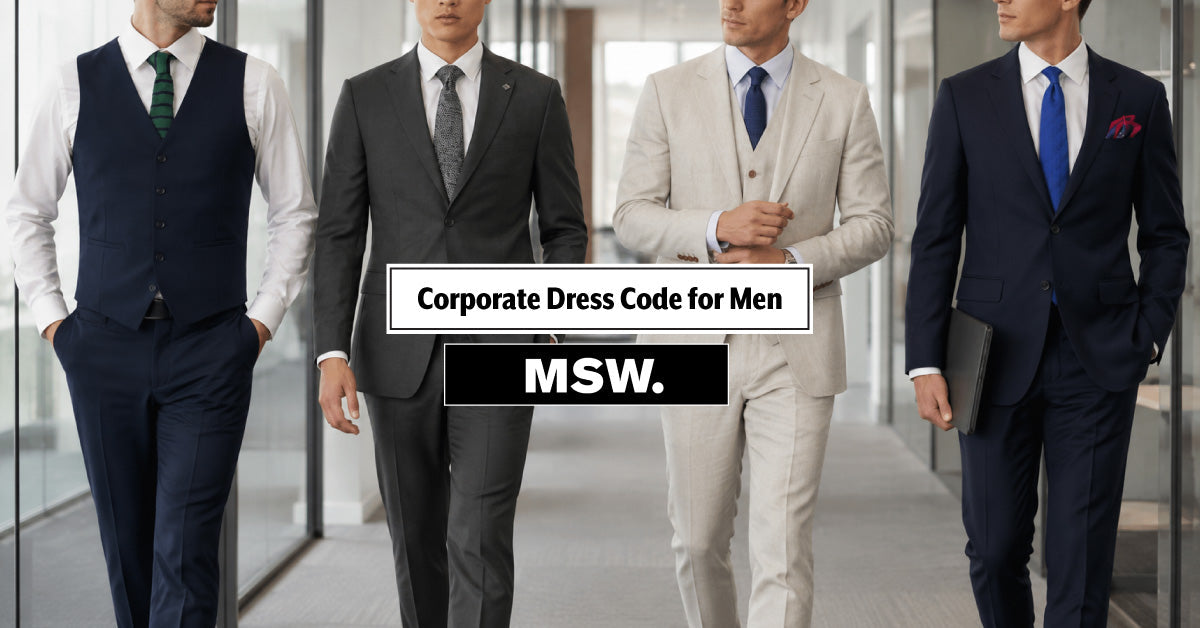
What are corporate clothes? By and large, they're built around a few pieces: a well-cut suit, a crisp dress shirt, tailored trousers, and leather shoes. Everything else, including knitwear, blazers, and chinos, gets added or left out depending on how formal the day calls for.
The 4 Categories of the Corporate Dress Code
Business Formal
Business formal is, as the name suggests, the most formal level: matching suit and tie, polished leather shoes, and plain colours. This is standard in law, finance, and any client-facing role with no flexibility on formality.
Business Professional
Business professional is one level less formal, though the two terms are often used to mean the same thing. It still calls for a suit, but allows more flexibility. It can be a patterned tie, a less conservative colour, and no waistcoat required.
Business Casual
Business casual is the most common level, and the one people misunderstand most. No suit required, but no jeans or sneakers either. A blazer, dress trousers or chinos, and a collared shirt covers most business-casual attires.
Read our complete guide: Business Casual for Men: The Complete Style Guide
Smart Casual
Smart casual is the least formal level that still counts as corporate. Dark jeans, a polo, and clean leather sneakers are acceptable. This is typically for creative and tech industries.
Browse related items here: Smart Casual Dress Code
What Is an Example of Corporate Attire?
Business formal: navy suit, white shirt, silk tie, black Oxfords.
The Hero Pieces:


Business professional: charcoal suit, light blue shirt, patterned tie, brown Oxfords.
The Hero Pieces:


Business casual: charcoal trousers, light blue shirt, navy blazer, brown derbies.
The Hero Pieces:


Smart casual: dark jeans, white polo, clean sneakers.
The Hero Pieces:


If you want a wardrobe that works across these levels without buying separate outfits for each one, get a quality business suit. Worn whole, it covers business formal. Broken up, with the jacket over chinos or the trousers with a knit, it covers business casual too.
Can Jeans Be Corporate Attire?
Generally, no. If your office allows them, they need to be dark, tailored, and free of rips or fading. Even then, pair them with a blazer and proper shoes to keep the outfit corporate rather than weekend. Sneakers make an outfit read as casual no matter what else you're wearing, so stick with loafers or derbies even on the days denim is allowed.
What Are the Best Colours for Corporate Attire?
Neutral colours are the safest choice, such as navy, charcoal, grey and black. They're easy to match with each other, and they work at every level from business formal to smart casual. A well-fitted suit in navy or charcoal will work for nearly every corporate dress code you're likely to encounter.
Once you have a few neutral pieces, you can add colour through smaller items like a patterned tie, a pocket square, or a shirt in pale blue or pink. Stick to one coloured or patterned item per outfit. Bright colours, fluorescents and novelty prints don't belong in any corporate dress code, formal or casual, unless of course, your office allows them.
Building a Wardrobe That Covers Every Code
Here's the part that actually makes dress codes simple: you don't need four separate wardrobes. A well-built capsule of tailoring pieces can flex across every one of these codes.
A single quality suit is the foundation. Worn as a full two-piece with a tie, it covers business formal. Drop the tie and it's business professional. Split the jacket and trousers, pair the jacket with chinos or the trousers with a knit, and you're dressed for business casual or smart casual, no extra shopping required.
At Men's Suit Warehouse, we build our men's business suits and business shirts with exactly this flexibility in mind. Come in, tell us what your week actually looks like (client pitches, board meetings, casual Fridays) and we'll help you build a wardrobe that moves with you, rather than one that only works for a single dress code.
FAQ
What's the difference between business casual and smart casual?
Business casual still expects a blazer, dress trousers or chinos, and a collared shirt. Smart casual allows dark jeans, a polo, and sneakers. Business casual is the more formal of the two.
Do I need a tie for business professional dress code?
Not always. Business professional calls for a suit, but many workplaces treat the tie as optional. Check what your colleagues wear and follow their lead.
Can I wear a suit jacket without matching trousers to the office?
Yes, for business casual. Pair the jacket with trousers in a different but complementary colour, and keep the rest of the outfit simple. Skip this combination for business formal or business professional, where the suit should match.
What should I wear if my workplace doesn't have a stated dress code?
Default to business casual until you learn the norms. Watch what your colleagues wear during your first week, then adjust to match.
Is business formal the same as black tie?
No. Business formal means a matching suit and tie for daytime work. Black tie is a separate evening dress code that calls for a tuxedo, and it doesn't apply to regular office wear.