Black Tie Dress Code for Men
Heading to the races? Discover what to wear to the races as a man - from formal enclosures to casual racedays, winter outfits, and Australian racing events.
A black tie invitation is one of the best things that can land in your inbox. It means someone went to the effort and the outfit is how you match it.
But, “Does black tie mean I need a tuxedo?”
Black tie is one of the few dress codes that can make even well-dressed men second-guess themselves.
Read on to know: what black tie actually means, what to wear, how the rules have shifted in recent years, and how to get it right in an Australian context.
What Is Black Tie Dress Code?
Black tie is a formal evening dress code - typically reserved for events that begin after 6pm. Think galas, award ceremonies, charity dinners, upscale weddings, and end-of-year functions at venues that mean business.
The dress code ladder, for reference:
|
Dress Code |
What It Means |
|
White Tie |
The most formal dress code. Tailcoat, white waistcoat, white bow tie. Rare in Australia. |
|
Black Tie |
Formal evening wear. Tuxedo or dinner jacket, black bow tie, dress shirt. |
|
Black Tie Optional |
A tuxedo is welcome but a dark suit is acceptable. |
|
Business Formal |
Full suit and tie. No tuxedo required. |
When an evening calls for black tie, it's usually the kind worth dressing properly for.
Black Tie Dress Code for Men: The Essentials
The Tuxedo or Dinner Jacket
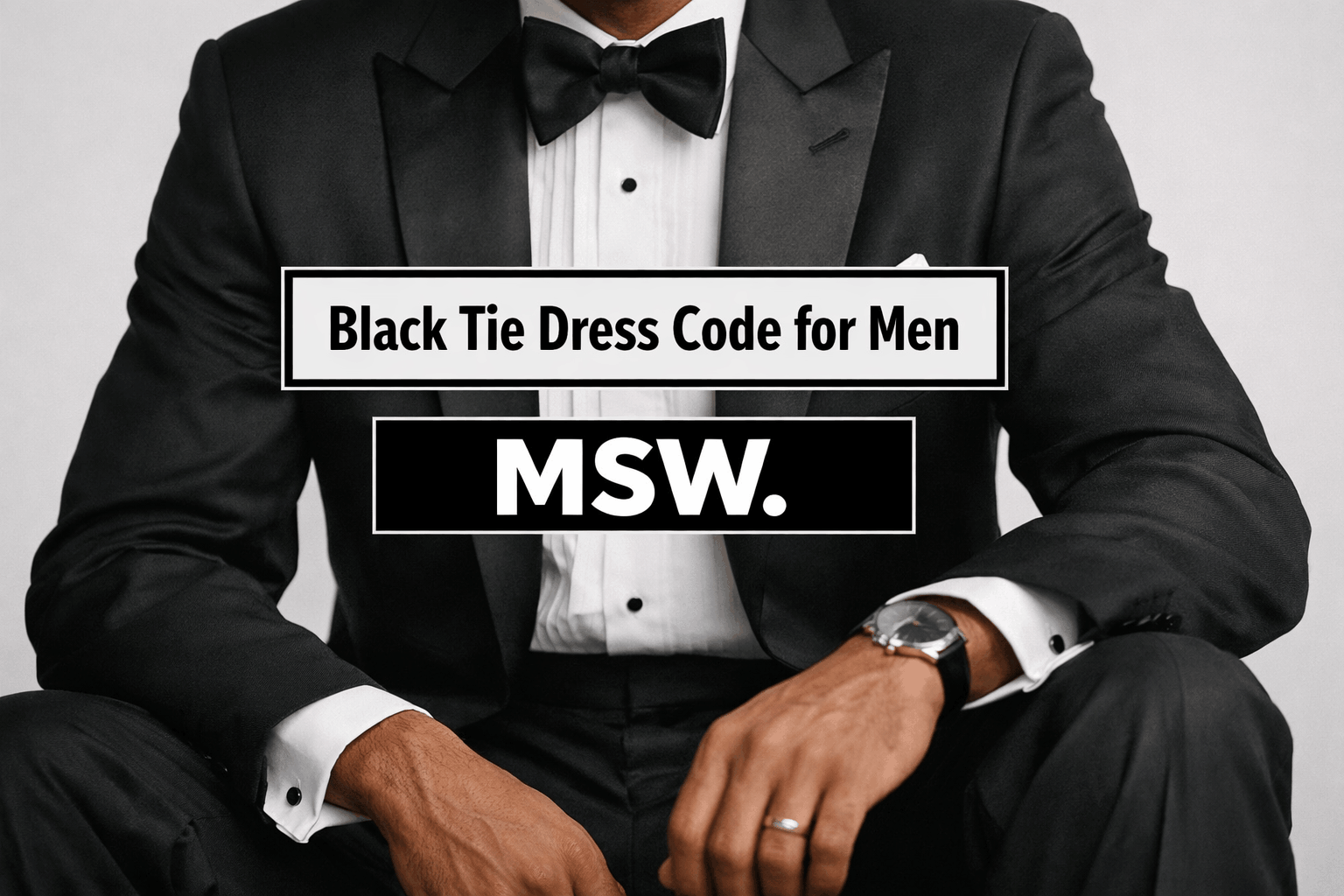
The foundation of a black tie outfit is a dinner jacket (also called a tuxedo jacket) worn with matching trousers. Black is the traditional choice. Midnight navy is a widely accepted and increasingly popular alternative that photographs exceptionally well under evening lighting.
Lapel style matters here. A peak lapel or shawl lapel in satin or silk facing is the black tie standard. It's what distinguishes a dinner jacket from a regular suit jacket. Notch lapels are a step down and technically outside the strict black tie brief, though they're increasingly accepted at more relaxed formal events.
The trousers should have a single satin stripe down the outer seam — this is the detail that completes the tuxedo silhouette and sets it apart from a regular suit.
The Dress Shirt
A white dress shirt is the only correct choice for traditional black tie. It should have a stiff front, either a pleated bib or a marcella (piqué) front, and French cuffs for cufflinks. A standard business shirt, however crisp, is not the same thing.
Bow Tie vs Long Tie
A black bow tie is the traditional black tie accessory, and it should always be self-tied. A pre-tied bow tie is visible from across the room and will undermine an otherwise excellent outfit.
A long tie is not traditionally correct for black tie. But at more relaxed formal events and modern black tie occasions, a slim black silk tie is increasingly accepted. When in doubt, tie the bow.
Waistcoat or Cummerbund
Either is appropriate. A black silk cummerbund worn with the pleats facing upward is the classic option. A low-cut waistcoat in black or matching fabric is the more modern alternative. The purpose of both is the same: to cover the waistband and shirt between the jacket and trousers. Neither is strictly required if your jacket fits well and stays closed.
Shoes
Black patent leather Oxford shoes are the traditional choice for black tie. Highly polished black leather Oxfords are a widely accepted alternative. The shine matters more than the material. Suede, brown leather, and anything with a casual sole are not appropriate.
Accessories
Pocket square: A white pocket square in a flat or one-point fold. This is not the occasion for a patterned or colourful square.
Cufflinks: Keep them simple. A classic metal finish in silver or gold that doesn't draw attention away from the rest of the outfit.
Watch: If you wear one, a slim dress watch on a leather strap. Sports watches and smart watches are out of place.
Modern Black Tie: How the Rules Have Evolved
Traditional black tie has a clear brief. Modern black tie has a slightly more generous one and understanding the difference is useful.
Over the past decade, midnight navy has become a legitimate and widely worn alternative to black. Velvet dinner jackets in deep jewel tones (emerald, burgundy, midnight blue) have moved from eccentric to genuinely elegant at the right event. Slim-cut tuxedos have replaced the broader silhouettes of previous decades, and the shawl lapel has had a strong resurgence.
What hasn't changed: the formality of the occasion still requires a dinner jacket of some kind, a dress shirt, and dress shoes. Modern black tie is about personal expression within a formal framework, not an excuse to show up in a regular suit.
Black Tie at a Wedding
A black tie wedding is a specific brief and it comes with one additional consideration: don't upstage the groom.
For guests, a black or midnight navy dinner jacket with a black bow tie is the right call. Keep accessories understated. A white dinner jacket, while technically correct in some black tie contexts, risks drawing attention away from the wedding party and is best avoided as a guest.
What if you don't own a tuxedo? At a black tie optional wedding, a well-fitted dark suit (charcoal or black) with a dress shirt, black tie, and Oxford shoes is acceptable. At a strictly black tie event, a suit is a step down and will be noticeable. In that case, hiring a dinner jacket for the evening is a better option than arriving underdressed.
Black Tie in Australia: What You Need to Know
Australian black tie follows the same foundational rules as British and American equivalents. But in practice, Australians tend to wear them a little more loosely.
Summer evening events in particular present a practical challenge. A wool tuxedo in 30-degree heat is a commitment. In warmer months, a lightweight wool or wool-blend dinner jacket is a more comfortable alternative that still meets the brief. Some Australian events, particularly in Queensland and Western Australia, accept a white dinner jacket for summer black tie occasions.
The other distinctly Australian reality: not every venue enforces the dress code as strictly as the invitation implies. That said, arriving at a black tie event in a regular suit and finding yourself surrounded by tuxedos is an uncomfortable experience. When the invitation says black tie, it's worth taking seriously.
What Not to Wear to a Black Tie Event
These are the mistakes that stand out:
-
A regular business suit, even a well-fitted charcoal or navy one
-
A coloured or patterned dress shirt
-
A novelty or printed tie
-
A pre-tied bow tie (it shows)
-
Brown or casual leather shoes
-
Suede footwear of any kind
-
Jeans, regardless of how they're styled
The rule is simple: if it would work in a business meeting, it doesn't meet the black tie brief.
Dress for the Occasion at Mens Suit Warehouse
When the invitation says black tie, Mens Suit Warehouse has what you need. From dinner jackets and tuxedo trousers to dress shirts, bow ties, and pocket squares, our range covers the full black tie brief, traditional and modern.
Visit us in-store for expert advice on fit, fabric, and the details that make the difference. Or browse our full range online and arrive at your next black tie event looking exactly as the invitation intended.
FAQs
Does black tie dress code have to be black?
Not strictly. Black is the traditional choice, but midnight navy is a broadly accepted alternative, particularly in Australia. It photographs well under evening lighting and works at most black tie events. Ivory or white dinner jackets are occasionally worn in summer settings but are less universally accepted.
What does black tie dress code mean for men?
Formal evening wear. A dinner jacket with matching trousers, a white dress shirt, a self-tied black bow tie, and black Oxford shoes. Reserved for evening events and sits one level below white tie on the formality scale.
What does black tie dress code mean for a wedding?
Guests are expected to wear a dinner jacket and bow tie. Avoid anything that might upstage the wedding party, and a white dinner jacket in particular. If the invitation says "black tie optional," a well-fitted dark suit with a dress shirt and Oxford shoes is acceptable.
What is black tie dress code in Australia?
The same rules apply as anywhere else: dinner jacket, dress shirt, bow tie, dress shoes. Australians tend to wear them a little more loosely in practice. Summer events in warmer states often see lightweight dinner jackets or, occasionally, white dinner jackets.
What are the rules for black tie dress code?
Dinner jacket with satin or silk lapels, matching trousers with a satin side stripe, white dress shirt with French cuffs, self-tied black bow tie, and black Oxford shoes. Accessories should be understated: white pocket square, simple cufflinks, slim dress watch if worn.
Is black tie dress code formal?
Yes. Black tie sits below white tie and above black tie optional and business formal. It's the most commonly encountered formal dress code in Australia, typically seen at weddings, galas, and corporate events.